A clean car exterior turns heads, but a clean interior is what you live in every day. Here is a complete step-by-step guide to cleaning your car interior properly, with specific attention to South Florida’s unique challenges of sand, humidity, UV damage, and mold.
Interior car cleaning is one of those tasks that most drivers postpone longer than they should. Life gets busy, the front seat gets cluttered, and before long the car that felt fresh six months ago now has sand ground into the carpet, a dashboard that looks chalky and cracked, and a faint musty smell that no amount of air freshener seems to solve.
This guide covers how to clean your car interior thoroughly and professionally, from the floor mats up to the headliner, with specific focus on the issues that make South Florida’s interior cleaning challenges different from everywhere else in the country.
Why South Florida Makes Interior Car Cleaning More Challenging
Before getting into the step-by-step process, it is worth understanding why Palm Beach County and greater South Florida create a more demanding interior environment than most drivers coming from other states expect.
Sand: The Year-Round Abrasive
South Florida beaches generate fine quartz sand that is incredibly invasive. It travels on shoes, clothing, towels, and even through open windows. Once inside your car, sand works its way into carpet fibers, into seat track mechanisms, between seat cushions, and into every console crevice. When you or your passengers sit down and shift around, that sand acts as sandpaper against whatever surface it is in contact with, including leather seats and plastic dashboard surfaces.
Beach trips are a major source of interior sand in Palm Beach County, and it does not require a day at the beach to bring it in. Parking near sand, walking across sandy pavement in shopping centers near the coast in Jupiter or Tequesta, or having children in the car after any outdoor activity is enough to introduce significant sand into your interior.
Humidity and Mold: The Invisible Problem
South Florida’s humidity levels are among the highest in the continental United States, regularly exceeding 80 to 90 percent during summer months. Inside a car that is not dried properly after wet entry, or that has water intrusion from open windows during rain, or that carries wet beach towels and swimwear, humidity creates ideal conditions for mold and mildew growth.
Mold in car interiors typically starts in:
- Carpet padding and floor mat backing where moisture accumulates and does not evaporate
- Seat cushion foam beneath the fabric or leather layer
- HVAC vents and the evaporator core behind the dashboard
- Trunk carpet and spare tire well
Once mold establishes itself in automotive carpet or foam, it is exceptionally difficult to eliminate without professional extraction and treatment. Prevention through thorough drying and consistent cleaning is far easier and less expensive than mold remediation.
UV Damage: Dashboard Cracking and Fading
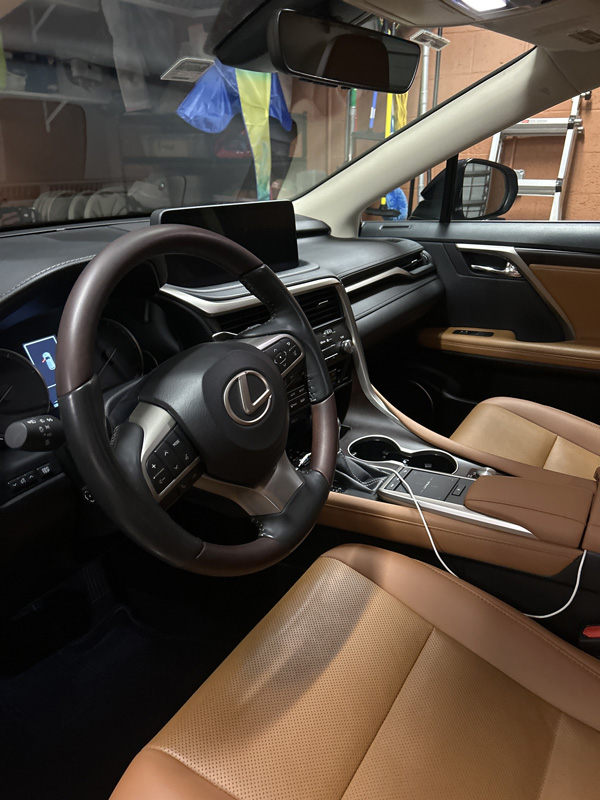
Florida receives more annual sunshine than almost any other state, and the UV intensity at South Florida’s latitude is severe. Without UV protection, your car’s dashboard, steering wheel, door panels, and any unprotected plastic or vinyl surface will bleach, crack, and degrade noticeably within a few years.
Dashboard cracking is particularly problematic because once the surface cracks, moisture and further UV exposure accelerate the degradation rapidly. A cracked dashboard is also extremely expensive to replace. Regular application of UV-protective dressings to interior plastic and vinyl surfaces is not optional in South Florida, it is essential maintenance.
Leather Care in Heat and Humidity
South Florida’s combination of heat and humidity creates a uniquely challenging environment for leather seats. Heat alone dries leather and causes cracking. But the combination of heat and high humidity can create conditions that encourage mold growth in the leather’s pores while simultaneously drying out the surface layers. Regular conditioning with a pH-balanced, water-based leather conditioner is essential for maintaining leather seat integrity in this climate.
Step-by-Step Guide: How to Clean Your Car Interior
This is the professional sequence for a thorough interior cleaning. Follow these steps in order for the most effective results.
Step 1: Remove Everything from the Interior
Before cleaning anything, take everything out of the car. Remove floor mats, items from the trunk, contents of the center console and glove box, car seats, and any personal items from door pockets and seat back pockets.
Cleaning around objects is less thorough than cleaning without them. Taking ten minutes to empty the interior completely saves significant time during the actual cleaning process and ensures you do not miss contaminated areas underneath items.
Step 2: Dry Vacuuming
Vacuuming before any wet cleaning is critical. Introducing moisture into a dry, dusty interior can create a muddy smear that is harder to remove than the original dust. Vacuuming first removes loose particles so that your cleaning products work on actual contamination rather than surface dust.
Vacuuming sequence:
- Headliner and upper surfaces (dust falls down)
- Sun visors
- Dashboard top surface and instrument cluster area
- Front seat surfaces and crevices (use crevice tool between seat and console)
- Console and cupholder area
- Rear seat surfaces and crevices
- Door panels, pockets, and jambs
- Carpet: front, rear, and trunk
- Floor mat surfaces before reinstalling
Use the crevice tool aggressively around seat tracks and between the console and seat, where sand and small debris accumulate in quantities that standard floor vacuuming misses entirely.
Step 3: Clean the Floor Mats Separately
Floor mats deserve separate attention because they absorb the most contamination. Rubber mats can be removed and rinsed with a hose, scrubbed with an all-purpose cleaner, and allowed to air dry completely before reinstalling. Fabric mats should be vacuumed thoroughly, spot-treated for stains, and either shampooed or taken to a professional for extraction cleaning.
Never reinstall wet mats into the vehicle. Moisture trapped under a mat is one of the primary sources of mildew smell development.
Step 4: Spot Treat Stains in Carpet and Upholstery
Before full carpet or upholstery cleaning, address specific stains with targeted treatment. Different stain types require different approaches:
- Food and beverage spills: Water-based cleaner or upholstery shampoo
- Grease and oil: Solvent-based spot cleaner
- Protein stains (blood, vomit): Enzyme-based cleaner (avoid hot water, which sets protein stains)
- Ink: Isopropyl alcohol on a microfiber cloth with gentle dabbing
- Mold or mildew: Diluted white vinegar solution followed by thorough extraction and drying
Always test any cleaning product on a hidden area before applying to visible upholstery surfaces.
Step 5: Shampoo or Extract the Carpet
For a thorough interior clean, vacuuming alone is insufficient for carpet. Carpet fibers in a vehicle trap fine particulate, oils from shoes, liquid residues, and biological matter that vacuum suction cannot fully remove.
Options for carpet cleaning:
- Foam upholstery shampoo with brush agitation: Apply foam cleaner, work into carpet fibers with a stiff but non-metallic brush, allow to dwell, then blot with a clean microfiber towel. Repeat as needed.
- Hot water extraction: The most thorough DIY option, using a portable carpet extractor to inject hot water and cleaning solution and immediately extract it along with dissolved contamination.
The critical step after any wet carpet cleaning is ensuring the carpet dries completely before closing the vehicle. Parking in the sun with doors open, using fans, or running the HVAC on the highest heat setting with windows cracked all assist drying. Never close and seal a car with wet carpet.
Step 6: Clean Fabric Seats (or Skip to Leather Section Below)
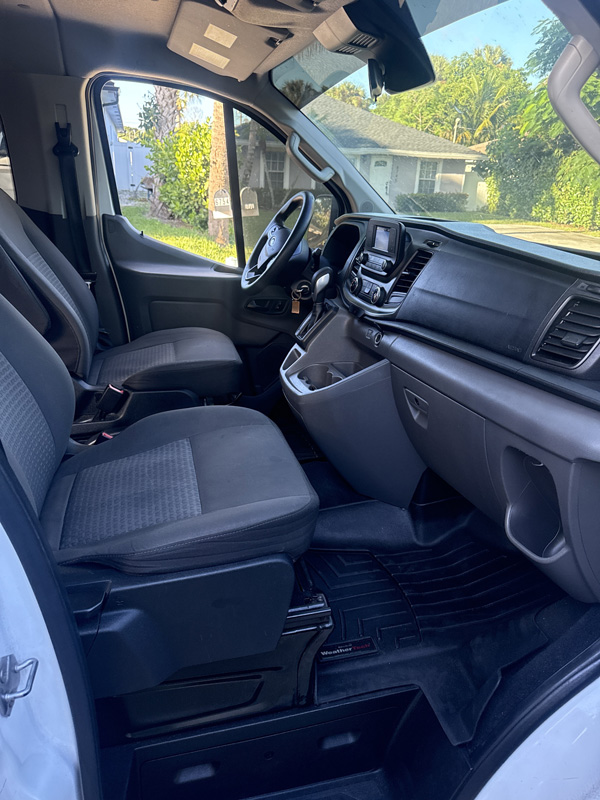
Fabric seat cleaning follows a similar process to carpet cleaning. Apply upholstery shampoo or a foam upholstery cleaner, work into the fabric gently with a soft brush, and blot away the extracted soil with clean microfiber towels. Avoid soaking the seat foam, as deeply saturated foam takes an extremely long time to dry and creates mold risk.
Step 6 (Alternate): Leather Seat Cleaning and Conditioning
Leather requires a two-step process: cleaning followed by conditioning. Never condition leather without cleaning it first, as conditioning locks in surface contamination and can trap damaging particles against the leather surface.
Leather cleaning:
Use a pH-neutral, water-based leather cleaner on a soft microfiber cloth or a dedicated leather cleaning brush. Work the product into the leather surface in small sections, agitating gently to lift oils, body sweat, and surface contamination from the leather’s grain. Wipe away with a clean cloth.
Leather conditioning:
Apply a water-based leather conditioner with a clean, soft microfiber cloth in thin, even coats. Allow to absorb for 10 to 15 minutes, then buff away any excess. Do not over-apply conditioner, as excess product that does not absorb can create a sticky surface residue.
In South Florida’s climate, conditioning leather seats every two to three months is recommended. The combination of heat and UV exposure inside a car parked in the sun degrades leather rapidly without regular conditioning.
Step 7: Clean the Dashboard, Console, and Door Panels
Plastic, vinyl, and rubber interior surfaces require an all-purpose interior cleaner that is safe for plastics (check that it is non-silicone-based, as silicone can create an overly greasy surface that attracts more dust).
Cleaning sequence:
- Apply interior cleaner to a microfiber cloth, not directly to the surface (prevents product from getting into vents and electronic components)
- Work from top to bottom: dashboard top, instrument cluster surround, central infotainment area, climate controls, center console surfaces, door panels
- Use a detail brush or cotton swabs for air vents, switch surrounds, and crevice areas
- Wipe cup holders, door pockets, and any storage bins
Step 8: Clean Interior Glass
Interior glass is frequently neglected during car cleaning and is a significant factor in how clean the interior feels and looks. Windshield interior film, a greasy haze produced by outgassing from interior plastics and vinyl, reduces forward visibility particularly in low-angle sun conditions that are common during South Florida’s morning and afternoon drives.
Use an automotive glass cleaner on a clean, lint-free microfiber glass cloth. Clean in an up-and-down motion on vertical glass surfaces and in circular motions on the windshield. Use a second dry cloth for buffing to a streak-free finish.
Step 9: Apply Interior Dressing with UV Protection
This step is not optional in South Florida. After all surfaces are cleaned and dry, apply a water-based interior dressing with UV protection to all plastic, vinyl, rubber, and trim surfaces. This:
- Restores the factory matte or satin finish appearance of dashboard and panel surfaces
- Creates a UV-blocking layer that prevents the fading, chalking, and cracking that South Florida’s sun would otherwise cause
- Repels dust accumulation slightly, keeping interior surfaces cleaner between washes
Avoid silicone-based dressings on steering wheels or gear shift knobs, as these create a dangerous slippery surface. Also avoid applying interior dressing to floor mats or pedal surfaces.
When to DIY vs. When to Get a Professional Interior Detail
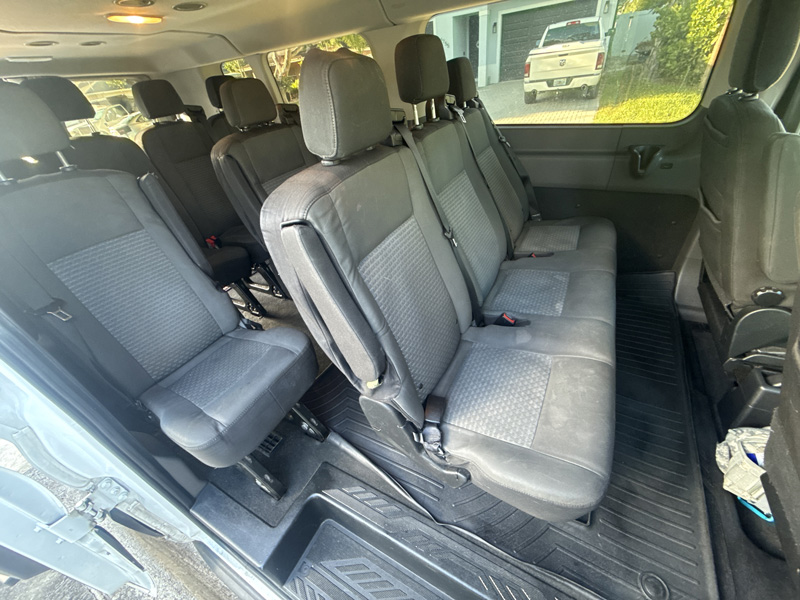
The step-by-step process above produces excellent results if you have the right products, the right tools, and the time to do it properly. A thorough DIY interior cleaning takes two to three hours for an average-sized sedan.
However, there are situations where professional interior detailing is clearly the better choice:
- Mold or mildew: Requires professional extraction, treatment, and anti-fungal application
- Pet hair and dander: High-volume pet hair requires specialized extraction tools and techniques
- Heavily soiled carpet and upholstery: Embedded contamination from months or years of use requires machine extraction
- Smoke-damaged interiors: Requires ozone treatment and thorough deep cleaning beyond what DIY products can achieve
- Leather in poor condition: Cracked, dried, or mold-affected leather requires professional assessment and treatment
- Full vehicle detail before sale or lease return: A professional finish that DIY cannot match
Chadwick’s Signature Interior Detail at Unlimited Auto Wash
Our Chadwick’s Signature Interior Detail (starting at $150 for sedans and small SUVs, $175 for large SUVs and trucks) delivers a genuinely professional interior cleaning that uses techniques and products beyond the reach of most DIY efforts.
What Is Included
- Full interior detail and blown out of crevices: Our team uses compressed air to remove debris from every vent, switch, and crevice before any wet cleaning begins
- Clean and condition seats: Both fabric and leather seats are treated with appropriate Chadwick’s organic cleaning products, followed by conditioning for leather
- Carpets and mats cleaned: Professional extraction cleaning that removes embedded contamination from carpet fibers and mat backing
- Dash and console cleaned and dressed: All hard surfaces cleaned and treated with UV-protective interior dressing to prevent South Florida’s sun from causing premature cracking and fading
- Chadwick’s Signature Organic Products: All cleaning is performed with Chadwick’s line of biodegradable, pH-balanced, non-toxic interior products specifically formulated for automotive use
Our complete detail package (Chadwick’s Complete Detail, starting at $250 for sedans) combines the Signature Interior Detail with a full Signature Exterior Detail including clay bar treatment, ceramic protective finish, and graphene glass treatment.
Club members receive a 10% discount on all detailing services.
For a lighter interior refresh as part of your regular wash, our Wheel Deal package ($35) includes interior vacuuming, interior glass cleaning, and a wipe-down of doors, jambs, console, dash, and cup holders. The Ultimate Special ($45) adds interior dressing of the front doors, dash, and center console. Our top-tier Chadwick’s Signature Wash ($55) adds leather conditioning as a standard inclusion.
Maintaining a Clean Interior in South Florida: Practical Tips
Between professional details or thorough DIY sessions, these habits make a real difference in keeping your interior cleaner:
- Remove shoes at the car door when returning from the beach, eliminating the majority of sand before it enters the vehicle
- Use rubber all-weather floor mats instead of carpeted mats during rainy season, making cleaning significantly faster
- Keep a microfiber cloth in the car for immediate wipe-down of spills before they set
- Leave windows cracked slightly when parked in safe environments to prevent moisture and heat buildup that promotes mildew
- Wipe the dashboard monthly with a UV-protective interior detailer to maintain the protection layer
- Vacuum before you smell the problem, not after
Professional Interior Car Cleaning in Palm Beach County
A clean interior is not just about appearance. It is about the daily experience of being in your vehicle, the air quality you breathe during your commute, and the long-term preservation of materials that are expensive to restore or replace.
Unlimited Auto Wash’s professional interior detailing team uses Chadwick’s organic product line and professional-grade extraction equipment to deliver results that genuinely exceed what most drivers can achieve at home, and in significantly less time.
With six locations across Palm Beach County in Jupiter, Tequesta, Palm Beach Gardens (two locations), West Palm Beach, and Wellington, there is always an Unlimited Auto Wash nearby. We are open seven days a week, and appointments are recommended but not required for most wash services. For detailing, we encourage scheduling in advance to ensure appropriate time is reserved for your vehicle.
Call 561-WASH-ME-2 or visit unlimitedautowashclub.com to learn more about our interior detailing packages, view pricing, and book your next service.
- Download our Free Mobile App Today: Google Play or The App Store
Chadwick’s Signature Interior Detail starts at $150. Chadwick’s Complete Detail starts at $250. Wash packages with interior service start at $35. Club members receive 10% off all detailing. Memberships from $45/month with unlimited washes at all 6 Palm Beach County locations.