Bird droppings on your car are more than an annoyance. In South Florida’s heat, they can etch your clear coat within hours. Here is how to remove them safely and why preventing the damage before it starts is the smarter play.
If you have ever walked out to your car in Jupiter or West Palm Beach and found a fresh bird dropping on your hood, you already know the frustration. What most drivers do not realize is just how quickly that seemingly harmless white splatter can cause permanent paint damage. Understanding the chemistry behind bird poop car paint damage, the right removal techniques, and how a consistent wash routine protects your vehicle can save you hundreds of dollars in paint repair costs down the road.
Why Bird Droppings Damage Car Paint
Bird droppings are not just waste. They are a chemically aggressive combination of uric acid, digestive proteins, and partially digested organic matter. This cocktail poses a genuine threat to your vehicle’s clear coat and paint layers.
The Science of Uric Acid and Paint
Unlike mammal urine, which contains primarily urea, birds excrete uric acid as their primary nitrogen waste. Uric acid is a semi-solid, highly concentrated compound with a pH typically ranging from 3.5 to 4.5. For context, your car’s clear coat is designed to resist many environmental threats, but sustained exposure to acidic compounds at this pH level will begin etching the surface.
Here is what happens once bird droppings land on your paint:
- Initial contact: The uric acid immediately begins a mild chemical reaction with the clear coat surface.
- Thermal acceleration: As your car sits in the South Florida sun, the surface temperature can reach 150°F or higher. This heat dramatically accelerates the etching process, softening the clear coat and driving the acid deeper.
- Drying and bonding: As the dropping dries, it contracts. This contraction creates a pulling effect on the softened clear coat surface, leaving behind a textured etching pattern that mirrors the shape of the dropping.
- Staining: The pigments from the bird’s diet leave behind discoloration even after the droppings are removed, particularly on lighter-colored vehicles.
The damage timeline in South Florida is genuinely alarming. In summer conditions with direct sun exposure, noticeable etching can occur in as little as two to four hours. In cooler, shaded conditions, you may have 24 to 48 hours before permanent damage sets in. The bottom line: bird droppings on car paint should be addressed the same day, every time.
Why South Florida Vehicles Face Elevated Bird Dropping Risk
South Florida is not just any subtropical environment. The combination of tropical bird populations, migratory patterns, and abundant waterfront locations makes Palm Beach County one of the most bird-active regions in the continental United States.
The Birds You Are Up Against
- Boat-tailed Grackles are common throughout Palm Beach County’s commercial parking lots, gas stations, and strip malls. They are highly social, which means where you find one, you find dozens. A flock of grackles can deposit an enormous amount of droppings on a vehicle in minutes.
- Fish Crows and American Crows are adaptable, intelligent birds found throughout the county. They are attracted to dumpsters and food waste near popular parking areas.
- Laughing Gulls and Herring Gulls are year-round coastal residents. If you park near the Intracoastal Waterway, any of the marinas in Jupiter or Tequesta, or near waterfront dining in West Palm Beach, seagull droppings are a constant hazard.
- Great Blue Herons and Anhinga’s are abundant near waterways and drainage canals. Their larger body size means their droppings are significantly more acidic and voluminous.
- Migratory songbirds pass through Palm Beach County in enormous numbers each fall and spring during migration season, dramatically increasing bird activity during those periods.
- Monk Parakeets and other invasive parrot species have established large, permanent colonies throughout South Florida. These birds congregate in flocks and their communal roost trees become dropping hotspots.
If your car is parked near a tree that serves as a bird roosting site, under a power line, near a dumpster, or along any waterfront in Palm Beach County, your risk of bird dropping damage is significantly elevated compared to the national average.
How to Remove Bird Droppings from Your Car Safely
Speed matters above everything else. The sooner you address bird droppings, the less damage they cause. Here is how to remove them at home without making things worse.
Step 1: Do Not Wipe Dry
This is the most common mistake. Dry bird droppings contain hardened uric acid crystals and grit. Wiping a dry dropping across your paint is essentially dragging sandpaper across the clear coat. Never attempt to wipe, scrape, or scratch dry bird droppings off your car.
Step 2: Soften the Dropping First
Apply a small amount of warm water or a dedicated bird dropping spray detailer directly onto the dropping. Allow it to soak in for 30 to 60 seconds. The moisture will begin to rehydrate and loosen the deposit.
What to use:
- Warm water from a spray bottle
- A dedicated quick detailer spray
- A small amount of waterless wash product
- A damp microfiber cloth held against the spot for 30-60 seconds
Step 3: Gently Lift, Do Not Rub
Once the dropping is softened, use a clean, soft microfiber cloth. Fold it so you are using a clean face. Press gently onto the dropping and use a lifting motion rather than a wiping motion. Lift the material off the surface rather than spreading it.
Replace the cloth face after each pass. Never use a paper towel, rough cloth, or anything that could introduce fine scratches.
Step 4: Clean the Area Thoroughly
Once the visible dropping is removed, clean the area with a pH-neutral car wash soap or quick detailer to neutralize any remaining acid. Rinse and dry with a clean, dry microfiber cloth.
Step 5: Inspect and Protect
After cleaning, inspect the area under good light. Run your fingertip lightly across the surface. If you feel a rough, dull, or slightly recessed texture where the dropping was, some etching has already occurred. Light etching may be addressed with a polishing compound. Deeper etching requires professional paint correction.
Apply a fresh coat of spray wax or paint sealant to the cleaned area to restore the protective barrier.
What to Avoid
- Household cleaners or window cleaners: These often contain ammonia or alcohol concentrations that strip wax and can damage clear coat.
- Acetone or nail polish remover: Extremely damaging to automotive paint.
- Rough or dry materials: Paper towels, old T-shirts, and shop rags all have the potential to cause fine scratches on softened clear coat.
When DIY Is Not Enough: Professional Bird Dropping Removal
If you are dealing with old, dried bird dropping stains, multiple spots across multiple panels, or paint that already shows signs of etching, a professional hand wash and detail is the right call.
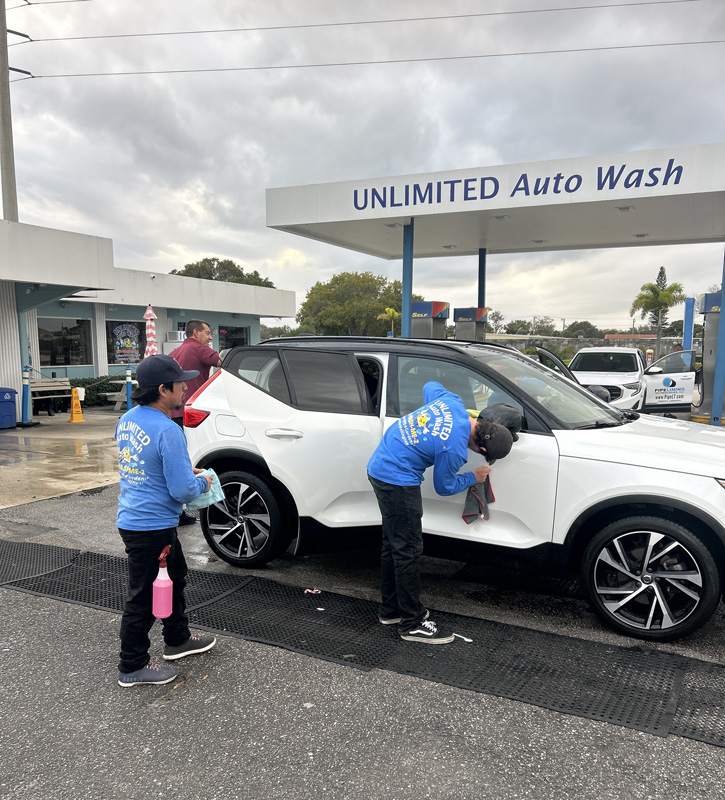
At Unlimited Auto Wash, our team uses Chadwick’s organic, pH-balanced cleaning products specifically formulated to safely lift biological contaminants from automotive paint without causing additional damage. Every vehicle we work on receives a genuine 100% hand wash by trained staff who inspect each panel up close, something no automated car wash can replicate.
Our professional removal process includes:
- Pre-spray treatment on affected areas to begin softening contaminants before the wash
- Hand washing with soft mitt technology and Chadwick’s biodegradable wash formulas
- Spot inspection on every panel during the drying and finishing process
- Spray wax or graphene shield application (depending on your selected package) to re-protect the paint after cleaning
- Interior finishing at higher package tiers to ensure your whole vehicle feels as good as it looks
One of our customers, Andrew Schor, came in with what he believed was an extensive bird poop problem across his daughter’s car. “They assured me it wasn’t an issue. In an hour they removed all stains and waxed my car.” That is the Unlimited Auto Wash experience.
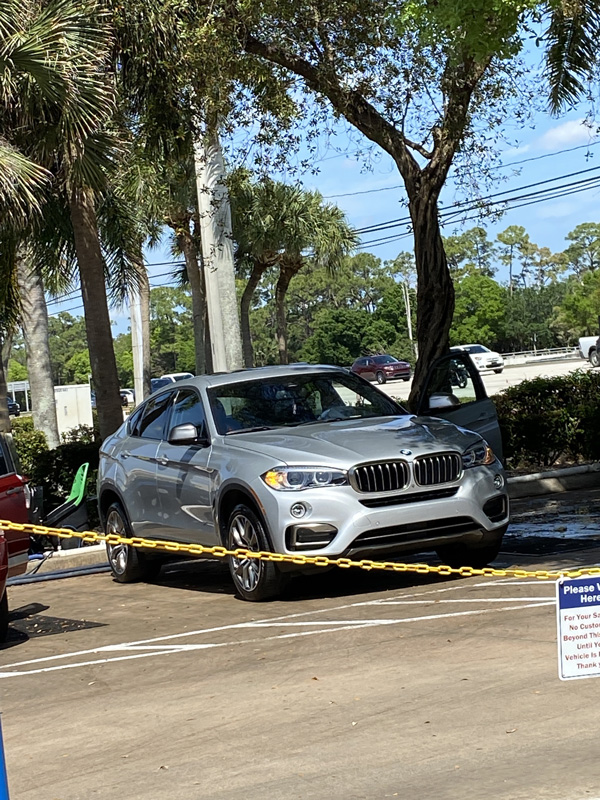
The 72-Hour Rain Guarantee Covers More Than Rain
Our 72-hour rain guarantee is one of the most customer-friendly policies in the car wash industry, and it applies directly to situations like bird dropping damage.
Here is how it works: if your car gets dirty for any reason within 72 hours of a single wash service, bring it back and we will rewash the exterior for free. That includes bird droppings. If you pull out of our Jupiter location on a Tuesday morning, drive to a parking lot, and a flock of grackles parks overhead, you have got 72 hours to bring your car back to any of our six locations for a complimentary exterior rewash.
For members of our Unlimited Wash Club, the protection is even simpler. You can wash your car once per day, every day, at any of our six Palm Beach County locations. If bird droppings are a recurring issue for where you park, daily washes are included in your membership and there is no additional cost.
How Regular Washing Prevents Permanent Bird Poop Stain Damage
The most effective defense against bird dropping paint damage is a routine that ensures deposits are never on your car long enough to etch. South Florida’s climate amplifies damage rates compared to cooler states, making the advice to “wash it when you get around to it” genuinely risky for your paint.
Our team recommends washing your car at least once per week in Palm Beach County’s conditions. The combination of intense UV exposure, high heat, and South Florida’s bird population creates a paint-damaging environment that weekly washing directly counteracts.
Key protective habits:
- Wash weekly: Our wash packages start at just $23 for the Exterior Wash, which includes a 100% hand wash, wheel cleaning, spot-free rinse, and hand drying.
- Maintain a wax layer: Packages at the Wheel Deal tier ($35) and above include a protectant sealer wax. A fresh wax layer provides a sacrificial barrier that bird droppings attack before reaching your clear coat, buying you critical additional time for removal.
- Consider graphene protection: Our Graphene High Gloss Shield, included in the Chadwick’s Signature package ($55) and available as a premium add-on, provides longer-lasting, more durable paint protection against acidic biological contaminants.
- Join the Unlimited Wash Club: Members at the $45/month Exterior Wash tier can wash daily, which is the single most effective way to ensure bird droppings never sit long enough to cause damage.
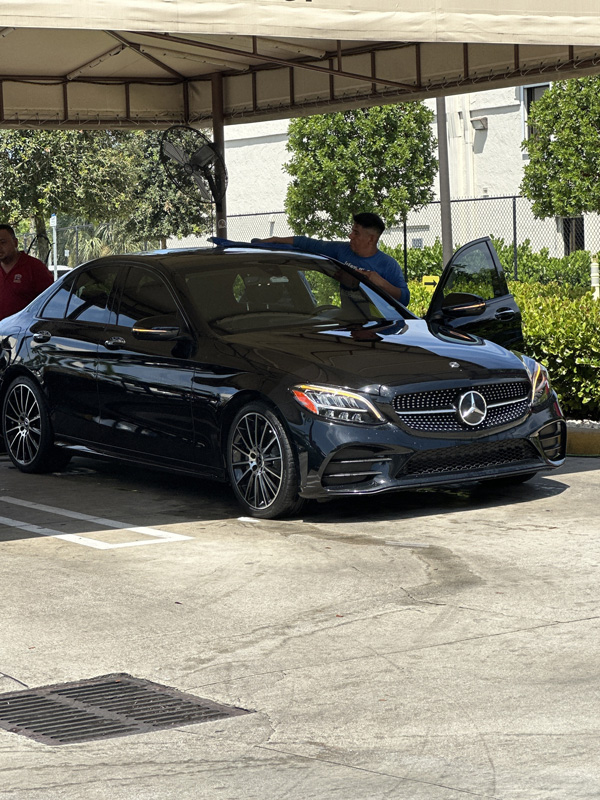
Bird Dropping Etching: When You Need a Detail
If you inspect your paint after removing bird droppings and find dull spots, a rough or cratered texture, or discoloration that will not wash away, the clear coat has been etched. At this point, normal washing will not restore the finish.
Mild etching can often be addressed with a machine polish during our Chadwick’s Signature Exterior Detail (starting at $150 for sedans and small SUVs). More severe etching may require a dedicated paint correction service. When you bring your car in for an assessment, our team will give you an honest evaluation of what is needed and what to expect.
Protect Your Paint at Unlimited Auto Wash Across Palm Beach County
Bird droppings on your car are a daily reality in South Florida. The difference between a clean, protected finish and expensive paint damage often comes down to how quickly and correctly you address the problem.
Unlimited Auto Wash has six locations across Palm Beach County, including Jupiter, Tequesta, Palm Beach Gardens (two locations), West Palm Beach, and Wellington, and we are open seven days a week. Our 100% hand wash process, Chadwick’s eco-friendly products, and 15+ years of community trust mean your vehicle gets the care it genuinely needs.
Do not wait for bird dropping damage to become permanent paint damage. Come in today.
Call us at 561-WASH-ME-2 or view our wash packages, memberships, and the 72-hour rain guarantee details.
Single washes from $23. Memberships from $45/month. Members save on all add-ons and receive 10% off all detailing services. Wash Club memberships work at all 6 locations whenever and wherever you need them.
- Download our Free Mobile App Today: Google Play or The App Store